
Convenors
Prof. Anne van Aaken

Anne van Aaken (Dr. iur. and MA Economics) is Alexander von Humboldt Professor for Law and Economics, Legal Theory, Public International Law and European Law, University of Hamburg. She was Professor at the University of St. Gallen, Switzerland from 2006-2018. She was Vice-President of the European Society of International Law and of the European Association of Law and Economics. She taught as a guest professor at numerous universities in Europe, Africa, Asia and Latin America as well as the USA and was a Global Law Professor at NYU 2016. She was a Fellow at the Institute for Advanced Study Berlin in 2010/11. She chairs the EUI Research Council, is general editor of the Journal of International Dispute Settlement (OUP) and a member of the editorial boards i.a. of the American Journal of International Law (CUP), European Journal of International Law (OUP), and International Theory (OUP). She has been consultant for the IBRD, OECD, UNCTAD, GIZ. She is currently working on behavioural economics/psychology of International Law and International Legal Theory and has published widely on those topics.
Webpage: https://www.jura.uni-hamburg.de/en/die-fakultaet/personenverzeichnis/aaken-anne-van.html
Twitter: @AakenAnne
Prof. Tomer Broude

Prof. Tomer Broude is Full Professor and Bessie and Michael Greenblatt, Q.C., Chair in Public and International Law, and currently Dean of the Faculty of Law at the Hebrew University of Jerusalem. He has formerly served as Academic Director of the Minerva Center for Human Rights at the Hebrew University of Jerusalem.
He specializes in public international law and international economic law, particularly international trade and investment, human rights, dispute settlement, development and cultural diversity. He is currently working on a book project on "Behavioral Economics and International Law," to be published by Oxford University Press (co-authored with Anne van Aaken). He is the author and editor of several books as well as numerous articles that have appeared in top-ranked publications such as International Organization, University of Pennsylvania Law Review, European Journal of International Law, Leiden Journal of International Law, Vanderbilt Law Review, Virginia Journal of International Law, International Journal of Cultural Property, Journal of World Trade, World Trade Review, and the Journal of International Economic Law. He is an Editor of the Journal of International Dispute Settlement and a General Editor of the Cambridge University Press book series on International and Economic Law (CITEL). He is one of the founders of the Society of International Economic Law and a former member of its Executive Council, and currently a Member of the Executive Council of TradeLab, an international network of university pro bono clinics and practica.
He has taught at numerous law schools around the world, such as the University of Toronto, University of Virginia, University of California-Los Angeles, Fordham Law School, Hong Kong University, Melbourne Law School, University of British Columbia and Gujarat National Law University. He is a distinguished fellow at the Munk School of Global Affairs and Public Policy at the University of Toronto (2020-2022); in 2022 he will be a Fellow at the Berlin-based Kolleg-Forschungsgruppe “The International Rule of Law - Rise or Decline?”.
He has been appointed to the indicative list of governmental and nongovernmental panelists to hear WTO disputes and the list of Israeli arbitrators under the Israel-MERCOSUR Free Trade Agreement. In 2018 he was appointed by the government of Canada to the roster of NAFTA Chapter 19 (Trade Remedies) Panelists (now USMCA). He is a member of Israel's Trade Remedy Advisory Board.
Prof. Veronika Fikfak

Veronika Fikfak is an Associate Professor in Human Rights Law at the Centre of Excellence, iCourts at the University of Copenhagen and a Senior Humboldt Fellow at the Institute of Law and Economics in Hamburg. She previously taught at the University of Cambridge as a Lecturer and then Senior Lecturer. Prior to this, Dr Fikfak worked at the European Court of Human Rights, the International Court of Justice, at UNESCO and at the Law Commission for England and Wales. She holds a Magister Juris, M.Phil and a D.Phil from the University of Oxford.
Veronika’s research interests are in the fields of international law, human rights, and public law. Veronika is currently in charge of European Research Council funded project Human Rights Nudge. In addition to running the Human Rights Nudge Project, which looks at how states implement their human rights obligations. She is a co-founder of the ESIL Interest Group on Social Sciences and International Law, co-convenor of the ESIL Interest Group on Courts and Tribunals and a member of the editorial board of Elgar International Law Book Series and the Cambridge Journal of International Law.
Webpage: https://www.humanrightsnudge.com
Prof. Shiri Krebs

Shiri Krebs is a Professor of Law and the Founding Director of the Centre for Law as Protection at Deakin University in Melbourne, Australia. She is an affiliate scholar at the Stanford University Center for International Security and Cooperation (CISAC) and an Executive Council member of the American Society of International Law (ASIL). She recently completed her term as a Visiting Legal Fellow at the Australian Department of Foreign Affairs and Trade (DFAT), as well as her Alexander von Humboldt Experienced Researcher fellowship at the University of Hamburg (2023-2026). Her research is currently funded by the Australian Research Council (ARC).
Prof Krebs research on surveillance, drone warfare, and military decision-making has affected policy in Australia and internationally through co-leading the Law and Policy theme at the Australian Government Cyber Security Cooperative Research Centre (CSCRC), serving as the elected Chair of the International Lieber Society on the Law of Armed conflict, and through invitations to brief defence leadership in Australia, the US, and Germany, as well as international bodies, such as the ICRC, the Australian Red Cross, and the United Nations CTED.
Her most recent research awards include the ‘David D. Caron Research Prize’, awarded by the American Society of International Law (2021), the ‘Researcher of the Year’ Award, Lawyers’ Weekly Women in Law Awards (2022), and the Australian Legal Research Awards (finalist, Article/Chapter (ECR), 2022). At Deakin, Krebs won three Vice-Chancellor awards, including the Early Career Researcher Award for Career Excellence (2019), Mid-Career Researcher Award for Career Excellence (2022), and Outstanding Contribution to Diversity and Inclusion Award (team-based, 2021).
Before joining Deakin University, Prof Krebs taught in several law schools, including at Stanford University, University of Santa Clara, and the Hebrew University of Jerusalem, where she won the Dean’s award recognising exceptional junior faculty members.
She earned her Doctorate and Master Degrees in the Science of Law from Stanford Law School (in 2017 and 2012, respectively), and completed her Master and Bachelor Degrees in Law and International Relations – all magna cum laude – from the Hebrew University of Jerusalem (in 2008 and 2005).
Prof. Daniel Peat

Daniel is an Assistant Professor of Public International Law at the Grotius Centre for International Legal Studies at Leiden Law School, and Academic Coordinator of the Advanced LL.M. on International Dispute Settlement and Arbitration. Before joining Leiden University, Daniel worked at the International Court of Justice as an Associate Legal Officer for Judge Abdulqawi A. Yusuf and received his Ph.D. from the University of Cambridge.
Daniel’s current research focusses on compliance with international legal obligations, exploring how insights from the behavioural social sciences might be used to better understand the behaviour of actors in international law. His current research project, which examines state compliance with international investment awards, is funded by the Norwegian Research Council and the Leids Universiteits Fonds.
Daniel’s first monograph, Comparative Reasoning in International Courts and Tribunals (Cambridge University Press 2019) won the European Society of International Law Book Prize in 2020. He has published articles in the British Yearbook of International Law, the N.Y.U. Journal of International Law & Politics, the Journal of International Dispute Settlement, and the Journal of World Trade & Investment, amongst others. Daniel also co-edited Interpretation in International Law (Oxford University Press 2015) with Andrea Bianchi and Matthew Windsor.
Daniel is a member of the editorial board of the Leiden Journal of International Law, co-founder and member of the coordinating committee of the ESIL Interest Group on Social Sciences and International Law, and a member of the ISDS Academic Forum. He also acted as co-rapporteur of the International Law Association Study Group on the Content and Evolution of the Rules of Interpretation.
Institutional webpage: https://www.universiteitleiden.nl/en/staffmembers/daniel-peat#tab-1
Twitter: https://twitter.com/danielcpeat
Prof. Eva van der Zee

Eva van der Zee is a Junior Professor (Tenure Track) in International Law with a Focus on Behavioural Law and Economics at the Institute of Law and Economics at Hamburg University Faculty of Law since 2019. She was previously a postdoctoral researcher at the Strategic Communication Group of Wageningen University where she studied the interrelation between trust and governmental regulation to promote the resilience of agricultural production systems using qualitative research methods. She conducted her PhD research at Wageningen University, New York University, and the European University Institute, where she researched the regulatory space of public and private sustainability standards within international and European legal frameworks (including trade law, human rights law, and competition law) using qualitative and quantitative research methods. She holds two LLM degrees, one in International Trade and Investment Law at the University of Amsterdam and the other in Legal Theory at Utrecht University (cum laude)
Eva’s current research focuses on the role and interrelation of formal and informal legal systems in promoting sustainable development using insights from the social sciences, in particularly behavioural economics, social psychology, and sociology. Eva has published articles in the Journal of World Trade, World Competition Law and Economic Review, Legal Issues of Economic Integration, and Sustainability, amongst others. In addition, she has advised governmental institutions in The Netherlands and published in Dutch (academic) outlets, such as Markt en Mededinging, on the role of law and policy to promote sustainable development. Eva received funding by the Deutsche Forschungsgemeinschaft (DFG) to organize the 2021 conference entitled “Sustainable development and the law: potential and challenges of using behavioural insights” where leading scholars presented data on the potential and challenges of using social sciences insights in law- and policy-making to promote sustainable development.
Members
Prof. Anna Spain Bradley
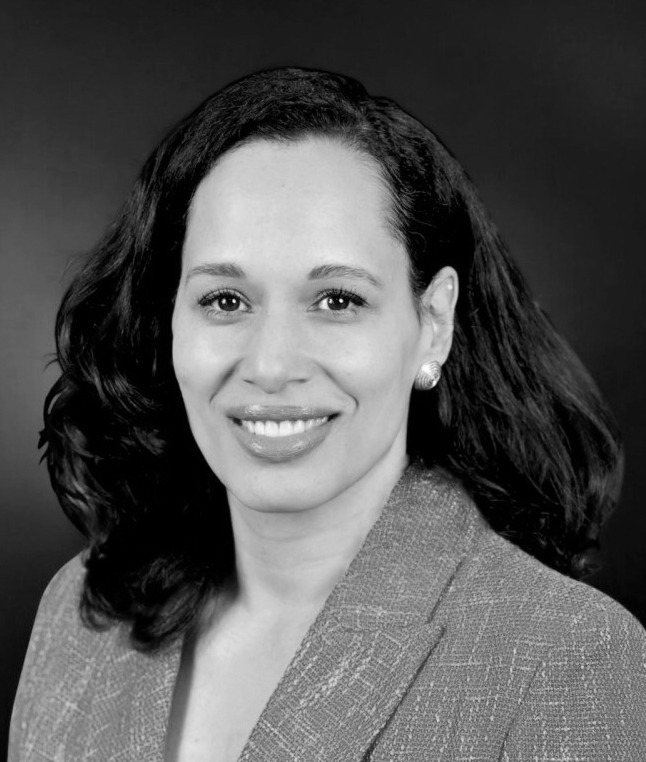
Anna Spain Bradley is a Professor of Law and the MacArthur Foundation Chair in International Justice and Human Rights at the University of California Los Angeles School of Law. Professor Spain Bradley’s current scholarly projects examine the legal history and doctrinal development of racism in international law, judicial emotion at the International Court of Justice, and the future of peace and world order. She is the author of Global Racism: A Challenge for the World (Oxford University Press, forthcoming October 2026), articulating racism as a universally available form of oppression operating on a global scale that poses a serious threat to humanity. The book builds upon her law review article Human Rights Racism (2019) identifying racism as an undefined violation of human rights under international law. Spain Bradley’s first book Human Choice in International Law (Cambridge University Press, 2021) challenges traditional assumptions about rationality in legal decision making by introducing insights from neuroscience to the study of international legal and political decision making. She is also co-editor of International Dispute Resolution (3rd ed., Carolina Academic Press, 2021) and the author of numerous law review articles and essays on the United Nations Security Council, international courts, and the peaceful resolution of disputes. Professor Spain Bradley’s scholarship has been recognized with the 2018 Gamm Justice Award for outstanding contributions to justice and the 2014 Francis Lieber Award from the American Society of International Law for exceptional scholarship on the law of war.
Professor Spain Bradley holds a J.D. from Harvard Law School and a B.A. magna cum laude from Denison University and clerked for the Honorable Judge Raymond L. Finch of the U.S. District Court of the Virgin Islands. In 2024, she was appointed by President Joseph R. Biden to the World Bank ICSID Panel of Conciliators. In 2021, she was appointed as a Legal Expert to the United Nations Ad Hoc Committee addressing the prevention of racist and xenophobic discrimination. She is a former Vice President of the American Society of International Law and previously served on its Executive Council for two terms. She served as Vice Chair of the Academic Council of the Institute for Transnational Arbitration and is a life member of the Council on Foreign Relations.
Website: https://law.ucla.edu/faculty/faculty-profiles/anna-spain-bradley
Prof. Rachel Brewster
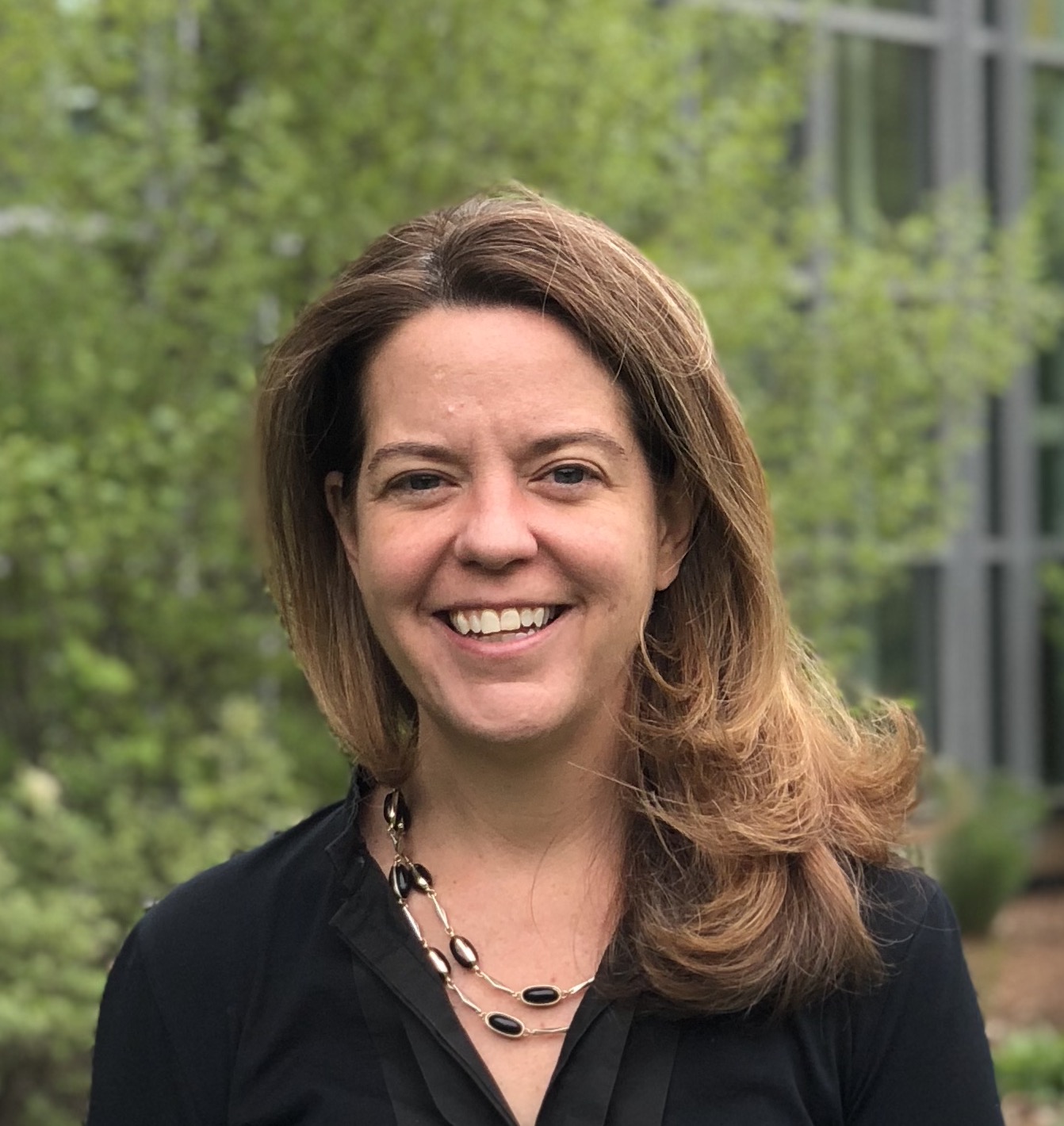
Rachel Brewster is the Jeffrey and Bettysue Hughes Professor of Law at Duke Law School. Her primary research interests include international trade law, international relations theory, theories of compliance, and anticorruption law. Her leading contribution to behavioral international law is her 2009 article, Unpacking the State’s Reputation, published in the Harvard International Law Journal. The article explores how a state’s reputation is a subjective concept, determined by a heterogenous set of actors, rather than an objective concept that the state can directly control. The article also highlights how the state’s reputation can shift between issue areas as well as the disconnection between the “state” and the acting government.
Brewster’s other scholarly interests focus on political economy approaches to international economic law. Most recently, she is researching the global development of anti-corruption norms and international cooperation to enforce of extraterritorial corruption law. She serves as co-director of Duke’s Center for International and Comparative Law and co-chair of Duke’s JD-LLM Program, and she is a member of the board of editors for the Journal of International Economic Law. Brewster received her B.A. and J.D. from the University of Virginia, where she was an article editor for the Virginia Law Review. She holds a Ph.D. in political science from the University of North Carolina at Chapel Hill. Before entering academics, she clerked for Judge Phyllis A. Kravitch of the U.S. Court of Appeals for the Eleventh Circuit and was a Bigelow Fellow at the University of Chicago Law School. In 2008, she served in the Office of the United States Trade Representative as a special counsel.
Prof. Harlan Cohen

Harlan Grant Cohen is the Gabriel M. Wilner/UGA Foundation Professor in International Law at University of Georgia, where he teaches courses on international law, U.S. foreign relations law, global governance, and international trade. He has also taught the international law colloquium, international human rights law, international business transactions, and international criminal law. Cohen also holds a courtesy appointment in the Department of International Affairs at the University of Georgia School of Public & International Affairs
Cohen’s scholarship focuses on international legal theory, global governance, international trade, and U.S. foreign relations law. Strands of his work focus on sources, authority, and fragmentation in international law, international law’s communities of practice, the function of international courts and tribunals, the role of history in both international and foreign relations law, and the U.S. Supreme Court's approaches to foreign relations law questions. He is Chair of the ASIL International Legal Theory Interest Group and a member of both the Board of Editors of the American Journal of International Law and the American Law Institute.
Cohen graduated from Yale University with a BA in History and International Studies and returned for an MA in History. He attended law school at NYU and is admitted to practice in the state of New York.
Prof. Charles D. Crabtree

Charles Crabtree is a Senior Lecturer (Associate Professor) in the School of Social Sciences at Monash University, a K-CLUB Professor at Korea University, a Senior Fellow at the Institute for the Study of States of Exception, and a Non-residential Fellow at the Kennan Institute. He studies intergroup relations, conflict, and discrimination, focusing on how social boundaries translate into unequal treatment across the United States, the Asia-Pacific, Eastern Europe, and the former Soviet Union. His research uses experiments, computational text analysis, machine learning, and large language models to measure and reduce bias. His work has appeared in the American Political Science Review, American Journal of Political Science, British Journal of Political Science, Journal of Politics, Nature Human Behavior, PNAS, and more than 40 other journals.
Dr. Sophie Duroy

Dr Sophie Duroy is a post-doctoral fellow at the KFG Berlin-Potsdam Research Group ‘The International Rule of Law: Rise or Decline?’. She is the author of The Regulation of Intelligence Activities under International Law, published by Edward Elgar in the International Law series in May 2023. Her research interests include human rights, intelligence and security, and behavioural and regulatory approaches to international law. Sophie obtained her PhD in law at the European University Institute in November 2020. She holds an LL.M. in Public International Law (cum laude) from Leiden University and an LL.B. Law and French Law with Maîtrise (Hons. 1st Class) from the University of Essex and the University of Paris X Nanterre.
Webpage: https://sophieduroy.weebly.com/
Prof. Christoph Engel

Christoph Engel (b. 1956) is Director at the Max Planck Institute for Research on Collective Goods, Bonn, Chair for Experimental Law and Economics, Erasmus University Law School, Rotterdam, and member of the Law Faculties in Bonn and Osnabrück. He mainly works on experimental law and economics and publishes in journals such as the Journal of Empirical Legal Studies, the American Law and Economics Review, the Journal of Economic Behavior & Organization, Economics Letters, or the Journal of Institutional and Theoretical Economics.
Prof. Jean Galbraith

Jean Galbraith is a Professor of Law at the University of Pennsylvania Carey Law School. A scholar of international law and U.S. foreign relations law, she received her B.A. summa cum laude from Harvard University and her J.D. from the University of California, Berkeley, School of Law, where she was the Editor-in-Chief of the California Law Review. Before turning to an academic career, she served as a law clerk for Justice John Paul Stevens of the Supreme Court of the United States and as an Associate Legal Officer at the International Criminal Tribunal for the former Yugoslavia for Judge Theodor Meron.
Her research interests include international legal design and U.S. foreign relations law. Her leading contribution to the field of behavioral international law is her 2013 article on Treaty Options: Behavioral Understanding of Treaty Design. Published in the Virginia Journal of International Law, this article shows that ratifying states respond very differently to “opt-in” treaty clauses than they do to otherwise equivalent “opt-out” treaty clauses and argues that this difference is largely due to behavioral biases.
Professor Galbraith is a member of the Board of Editors of the American Journal of International Law and previously served as the editor for its section on the Contemporary Practice of the United States Relating to International Law. She has published widely in general legal journals and international law journals, including the Leiden Journal of International Law, the Michigan Law Review, the NYU Law Review, the University of Chicago Law Review, the Virginia Law Review, and the Yale Journal of International Law. She is a member of the American Law Institute.
Faculty web page: https://www.law.upenn.edu/faculty/jgalbrai/
Prof. Moshe Hirsch

Moshe Hirsch is the Emilio von Hofmannsthal Professor of Law at the Hebrew University of Jerusalem and Co-director of the International Law Forum at the Hebrew University Law Faculty. A significant part of his publications involves theoretical and interdisciplinary research that draws, inter alia, on sociological literature, social-cognition studies, political economy, and international relations theory. His recent publications include Invitation to the Sociology of International Law (OUP, 2015); International Legal Theory and the Cognitive Turn (2025, co-edited with Anne van Aaken, OUP); International Law's Invisible Frames - Social Cognition and Knowledge Production in International Legal Processes (2021, co-edited with Andrea Bianchi, OUP); Research Handbook on the Sociology of International Law (2018, co-edited with Andrew Lang, Elgar); "Cognitive Sociology, Social Cognition and Coping with Racial Discrimination in International Law", European Journal of International Law (2019); “Regulators’ Mindsets, Ingroup Favoritism, and the National Treatment Obligation in World Trade Organization Law”, 23 German Law Journal (2022); "Social Movements, Reframing Investment Relations, and Enhancing the Application of Human Rights Norms in International Investment Law", Leiden Journal of International Law (2020), ‘The Role of International Tribunals in the Development of Historical Narratives’, Journal of History of International Law (2018); ‘Explaining Compliance and Non-Compliance with ICSID Awards: a Multiple Theoretical Approach’, Journal of International Economic Law (2016), and ‘The Sociological Perspective on International Law’, in Jeffrey L. Dunoff and Mark A. Pollack (eds.), International Legal Theory: Foundations and Frontiers (CUP, 2022); “Social Memory and the Impact of Commemorative Remedies Ordered by the Inter-American Court of Human Rights”, Leiden Journal of International Law (2022, co-authored with Milad Said Barguil); and “Sociological Analysis of International Law and the Cognitive Turn”, in International Legal Theory and the Cognitive Turn (Anne van Aaken and Moshe Hirsch, eds., OUP, 2025).
E-mail: moshe.hirsch"AT"huji.ac.il
Prof. Regina Jefferies

Regina Jefferies is an Assistant Professor in the Fairhaven College of Interdisciplinary Studies at Western Washington University, and an Adjunct Lecturer in the Faculty of Law & Justice at the University of New South Wales. She is a Fellow of the Salish Sea Institute and the Border Policy Research Institute. Jefferies earned a Ph.D. as a Scientia Scholar in Global Governance, Law, & Policy under the supervision of Prof. Guy Goodwin-Gill, Prof. Andrew Burns, and Dr. Claire Higgins. Prior to her doctoral studies, she attained a MSt in International Human Rights Law from the University of Oxford and a J.D. from the Sandra Day O’Connor College of Law at Arizona State University. Jefferies is also an attorney admitted to the bar in the United States, with more than a decade of experience in the practice of immigration and human rights law at the US Southern border. She has published articles in leading academic journals such as the Melbourne University Law Review, the Brooklyn Journal of International Law, and Globalizations. She has also presented at some of the field’s leading conferences, including the American Society of International Law Midyear Meeting and Research Forum and the Law and Society Annual Conference.
Prof. Desirée LeClercq

Desirée LeClercq is an associate professor of law at the University of Georgia School of Law and faculty co-director of the Dean Rusk International Law Center. She teaches International Trade and Workers Rights, International Labor Law, Public International Law, Contracts and U.S. Labor Law.
Before joining the UGA law faculty, Desirée was an assistant professor of labor law at the Cornell University School of Industrial Labor Relations and an associate faculty member in the Law School. She won the 2020 MacIntyre Award for Exemplary Teaching & Advising and the 2022 Women’s Leadership Initiative Leading Ladies Award.
Specializing in international and labor law, LeClercq has recently published extensively in flagship and specialty law reviews, including the Fordham Law Review, the Virginia Journal of International Law, the Journal of International Economic Law, the Columbia Journal of Transnational Law, the Administrative Law Review, the American University Law Review and the Berkeley Journal of International Law. Notably, her Columbia Journal of Transnational Law article titled “A Worker-Centered Trade Policy” won the ComplianceNet Outstanding Junior Publication Award. LeClercq has also contributed several book chapters on international trade and labor.
Desirée served as a director of labor affairs in the Office of the U.S. Trade Representative from 2016 to 2020, during which time she was an adjunct professor at the American University Washington College of Law. Additionally, LeClercq worked for nearly a decade as a legal officer at the International Labor Organization in Geneva, Switzerland, and served as staff counsel for the chairman of the National Labor Relations Board.
LeClercq is active in the American Society of International Law and serves on the Executive Committee of the AALS Human Rights and Labor Relations and Employment Law sections. Also, since 2022, she has served as a designated candidate to chair European Union Trade and Sustainable Expert Panel Proceedings.
Dr. Inbar Levy

Dr Inbar Levy is a Senior Lecturer at Melbourne Law School. She completed her DPhil in Law at University College, Oxford and had previously been awarded a Joint Law and Psychology LLB with Magna Cum Laude honours and subsequently an LLM with similar honours from the Hebrew University of Jerusalem. Inbar served as a legal advising officer in the Military Advocate General unit of the Israeli Defense Forces. She has held a Visiting Research Fellow position at Columbia Law School in the City of New York and a Visiting Researcher position at Harvard Law School. She was also a fellow at the Centre for the Study of Rationality and the Sacher Institute in Jerusalem, and most recently, a Houser Global Fellow at NYU School of Law. Her primary research areas are procedural justice and empirical legal research, with a particular interest in behaviour and decision-making, access to justice and institutional design.
Dr. Maria Laura Marceddu

Dr Maria Laura Marceddu is specialized in international investment law. Her research is centred mainly on European investment law and policy, and its repercussions on the international regime of foreign investment. More broadly, her research interests focus on international economic law, international economic relations and governance, international trade and investment law.
Maria Laura earned her Ph.D. in international economic law from King’s College London, where she has also been appointed as a visiting lecturer in international investment law, and as a fellow at the Centre of European Law. She recently joined the EUI as a Max Weber Fellow.
Prior to this, she worked as a teaching fellow at the University of Edinburgh (Law School) and is a fellow at the Edinburgh Centre for International and Global Law (ECIGL).
Since 2018 she has been serving as the executive treasurer of the Society of International Economic Law, where she also chairs the SIEL Online Conversations. She is a part of the steering committee of the interest group on International Economic Law of the Italian Society of International Law and European Law (SIDI).
Maria Laura has published peer-reviewed articles, most in leading journals such as the European Journal of International Law, the Journal of International Economic Law, the Yearbook on Investment Law and Policy (Oxford University Press). She has been invited to deliver several talks (in English, Italian, French) in major international conferences in her field, and to contribute to conferences organisation or to be part of the advisory board.
Prof. Lauge Poulsen

Lauge Poulsen is Professor of International Relations & Law and Head of Department of Political Science, University College London. Poulsen was chair of OECD's inter-governmental work on climate change and investment treaties from 2021 to 2025 and received an OBE for services to UK trade policy in 2022. Before joining UCL, Poulsen was a postdoctoral fellow at Nuffield College, University of Oxford, and he has been a visiting scholar at the Brookings Institution's Economic Studies Division and Melbourne Law School.
Prof. Sergio Puig
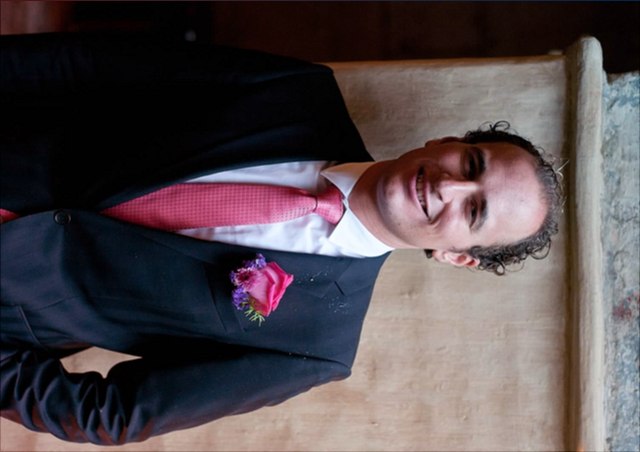
Sergio Puig is a Professor of Law at the James E. Rogers College of Law, University of Arizona. His previous academic track includes positions as lecturer and teaching fellow at the Stanford University – School of Law and Duke University – School of Law. He is the author of multiple articles and essays on international economic law, international dispute settlement and international law more generally—all available on ssrn. He is also the author of At the Margins of Globalization: Indigenous Peoples and International Economic Law by Cambridge University Press. Before entering academia, Professor Puig practiced international law and arbitration in leading firms in Washington, DC and Mexico and worked at ICSID and the World Bank. He has been appointed as arbitrator and has testified as expert before international tribunals. Professor Puig holds a law degree from Instituto Tecnológico Autónomo de México – ITAM (México), and two degrees (Master and Doctor of the Science of Law, respectively) from Stanford Law School.
Dr. José M. Reis

José M. Reis is a Post Doctoral fellow at the Social Physics and Complexity Lab (Laboratório de Instrumentação e Física Experimental de Partículas - LIP).
His current research interests circle around issues at the intersection of law and social science, with a focus on information diffusion in international law in general and human rights agenda-setting in specific, as well as on topics associated with the interaction between privacy, behavioral targeting, and disinformation. Methods-wise, he is interested in automatic data collection methods and on the potential of leveraging text-as-data methods for studying topics such as the framing of international law.
Prior to joining to joining his current positions, he worked as a research associate at the Institute of Law and Economics, University of Hamburg, on the project "Psychology and Behavioral Economics of International Law". He also briefly worked in Law firms in Portugal and India and as the co-director of the NGO “Pro Bono Portugal”, the first Public Interest Legal Clearing House in Portugal.
He holds a PhD in Law from the University of Hamburg, an LL.M. in Law and Economics from the University of Hamburg and University of Vienna, and was a Visiting Researcher at University of Pennsylvania Law School.
Dr. Yahli Shereshevsky

Dr. Yahli Shereshevsky is a senior lecturer (associate professor) at the University of Haifa Law School. He was previously a post-doctoral fellow at the Federmann Cyber Security Reserach Center, the Minerva Center for the Rule of Law under Extreme Conditions, and a Grotius Research Scholar at the University of Michigan Law School. Yahli specializes in international law, focusing on international humanitarian law, international lawmaking, international legal theory, war and technology, and international criminal law.
Yahli's PhD, from the Hebrew University of Jerusalem, was awarded the Malcolm and Judith Shaw Prize for an Outstanding Doctoral Dissertation in the Field of Public International Law. Yahli holds an LLB in Law and the “Amirim” Interdisciplinary Honors Program for Outstanding Students (summa cum laude) from the Hebrew University. He clerked for the Honorable Deputy Chief Justice Eliezer Rivlin of the Supreme Court of Israel. Yahli's work has been published in leading journals including the European Journal of International Law, the Virginia Journal of International Law, The Michigan Journal of International Law, and the Journal of International Criminal Justice.
Prof. Tommaso Soave

Tommaso Soave is an associate professor of law at Central European University. His research focuses on international economic law, international dispute settlement, legal theory, and sociological approaches to global governance. Tommaso's first book, The Everyday Makers of International Law (CUP 2022), explores the socio-professional dynamics of the international legal community and assesses their impact on the rulings of international courts and tribunals. He has also published numerous papers in his areas of research, some of which have been mentioned in the bibliography of the International Court of Justice. Tommaso previously worked as a dispute settlement lawyer at the World Trade Organization and as an associate attorney at Sidley Austin LLP. He regularly serves as a consultant for intergovernmental and non-governmental organizations on matters of trade and investment law. Tommaso has earned degrees from the Graduate Institute of International and Development Studies, Harvard Law School, Sciences Po Paris, and the University of Turin, and has been called to the Bar of New York.
Dr. Taylor St John

Taylor St John is a Senior Research Fellow at the Norwegian Institute of International Affairs. Her research focuses on the politics and law of international economic relations, and how institutions develop over time. Her monograph, The Rise of Investor-State Arbitration (OUP 2018), co-won the IPE Best Book Award from the International Studies Association. Then together with Anthea Roberts, she observed an investment law reform process within the United Nations over several years, producing a series of papers and blogs. Before moving to Oslo, she taught at the University of St Andrews, and previously held positions at the London School of Economics, the PluriCourts Centre at the University of Oslo, and the University of Oxford, where she also received her PhD. She serves on the editorial boards of the European Journal of International Law and Journal of International Economic Law, and is a general editor of the Journal of International Dispute Settlement.
Full CV here.
Prof. Doron Teichman

Prof. Doron Teichman is the Jacob I. Berman Professor of Law at the Faculty of Law of the Hebrew University of Jerusalem, and the former president of the Israeli Law and Economics Association. Prof. Teichman’s research interests include economic and behavioral analysis of law, empirical legal studies, and criminal law. He authored numerous articles in these areas, which were published in leading journals such as Michigan Law Review, NYU Law Review, Georgetown Law Journal, Northwestern University Law Review, Journal of Empirical Legal Studies, and Law and Society Review. His latest book, Behavioral Law and Economics (with Eyal Zamir, 2018), was published by Oxford University Press.
Prof. Teichman has been awarded numerous fellowships and prizes. Some of these include: the Fulbright Fellowship (2001–2003); the Olin Fellowship at the University of Michigan (2001–2003), The Inaugural Post Graduate Fellowship at The Center for Law Business and Economics at The University of Texas Law School (2005); and the Heshin Award for Excellence in Legal Research (2013). Prof. Teichman has also won numerous competitive research grants. He received two personal grants from the Israel Science Foundation (2012–2014; 2020–2023) and was a founding member of the Center for Empirical Studies of Decision-Making and the Law funded by the I-Core program.
Professor Teichman has served as a visiting professor at several leading law schools such as: Columbia University, Georgetown, University of Zürich, Tulane University and the Center for Transnational Legal Studies, London. He has also presented his work in numerous conferences and workshops, including the annual meetings of the American Law and Economics Association, the Society for Empirical Legal Studies, and the European Association of Law and Economics.
Full C.V. available here
Prof. van Zeben

Josephine van Zeben is Professor and Chair of the LAW group at Wageningen University (WUR), the Netherlands. She has also been a lecturer at the ETH Zürich – teaching Environmental Regulation: Law and Policy – since 2012. Before joining WUR, van Zeben was Fellow in Public and EU Law at Worcester College, University of Oxford (2014-2019). She holds a PhD in Law and Economics (cum laude) from the University of Amsterdam, and LLM degrees from Harvard University and the University of Amsterdam (European Private Law), an LLB in Scots Law from the University of Edinburgh and a BA in Social Sciences from University College Utrecht, Utrecht University.
Prof. van Zeben’s research focusses on the regulation of environmental issues by public and private actors across jurisdictions, with particular attention for polycentric governance theory and developments related to the European Union. She is research lead of the LAW Group's program "Law for the Living Environment". Her research draws on her interactions with colleagues from the social and life sciences, as well as her teaching to non-law students and lawyers from foreign jurisdictions. She actively searches for optimal ways of analysing complex legal and societal problems so as to facilitate interdisciplinary solutions. She is one of the creators of the new MSc Governance for Sustainability Transformations at WUR.
Prof. van Zeben is co-editor-in-chief of Transnational Environmental Law and part of the editorial board of several academic journals, including the Croatian Yearbook of European Law and Policy, and Istituzioni del Federalismo. She is also a board member of the Society for Environmental Law and Economics. She was Hauser Scholar at NYU (2010-11), has held visiting professorships at Notre Dame Law School (United States), La Trobe Law School (Australia) and provides guest lectures across the world.
Institutional webpage: https://www.wur.nl/nl/Personen/Josephine-prof.dr.mr.-JAW-Josephine-van-Zeben.htm
Twitter: @JosephinevZeben
Prof. Ingo Venzke

Ingo Venzke is Professor for International Law and Social Justice at the University of Amsterdam, Director of the Amsterdam Center for International Law (ACIL), and a Fellow at The New Institute in Hamburg (2021/22). His monographs include How Interpretation Makes International Law (OUP 2012), which won the book award of the European Society of International Law (ESIL), and In Whose Name? A Public Law Theory of International Adjudication (together with Armin von Bogdandy, OUP 2014). He recently edited Contingency in International Law: On the Possibilities of Different Legal Histories (together with Kevin Jon Heller, OUP 2021). Ingo is Editor-in-Chief of the Leiden Journal of International Law and his main research interests lie in international economic law and different dimensions of sustainability.
Prof. Michael Waibel

Michael Waibel is a professor of international law at the University of Vienna. His teaching and writing focus on international law, international economic law, sovereign debt and international dispute settlement. He received the Deák Prize of the American Society of International Law, the Book Prize of the European Society of International Law and a Leverhulme Prize for his research. He is Co-General Editor of the ICSID Reports (with Jorge Viñuales) and Co-Editor-in-Chief of the Journal of International Economic Law (with Kathleen Claussen and Sergio Puig).
Previously, he taught for a decade at the University of Cambridge, und was from 2015-2019 co-deputy director of the Lauterpacht Centre for International Law and Director of Studies at Jesus College. In 2010-2011 he was the Schmidheiny Visiting Assistant Professor in Law and Economics at the University of St. Gallen. In 2019, he was Nomura Visiting Professor of International Financial Systems at Harvard Law School.
He studied law at the universities of Vienna, Paris II Pantheon-Assas and Harvard Law School, and economics at the London School of Economics. He worked at the European Central Bank, the World Bank and the International Monetary Fund.